The New Begins, the Old Fades Out
After 25 years in the film business, we’re rewinding all the way back to the beginning – not despite our experience, but because of it. Not Another Mate is launching as a GenAI SaaS company, born from the worlds of film and software, stepping into a new era of moving-image production.
By Thomas Fenkart · 5 min read
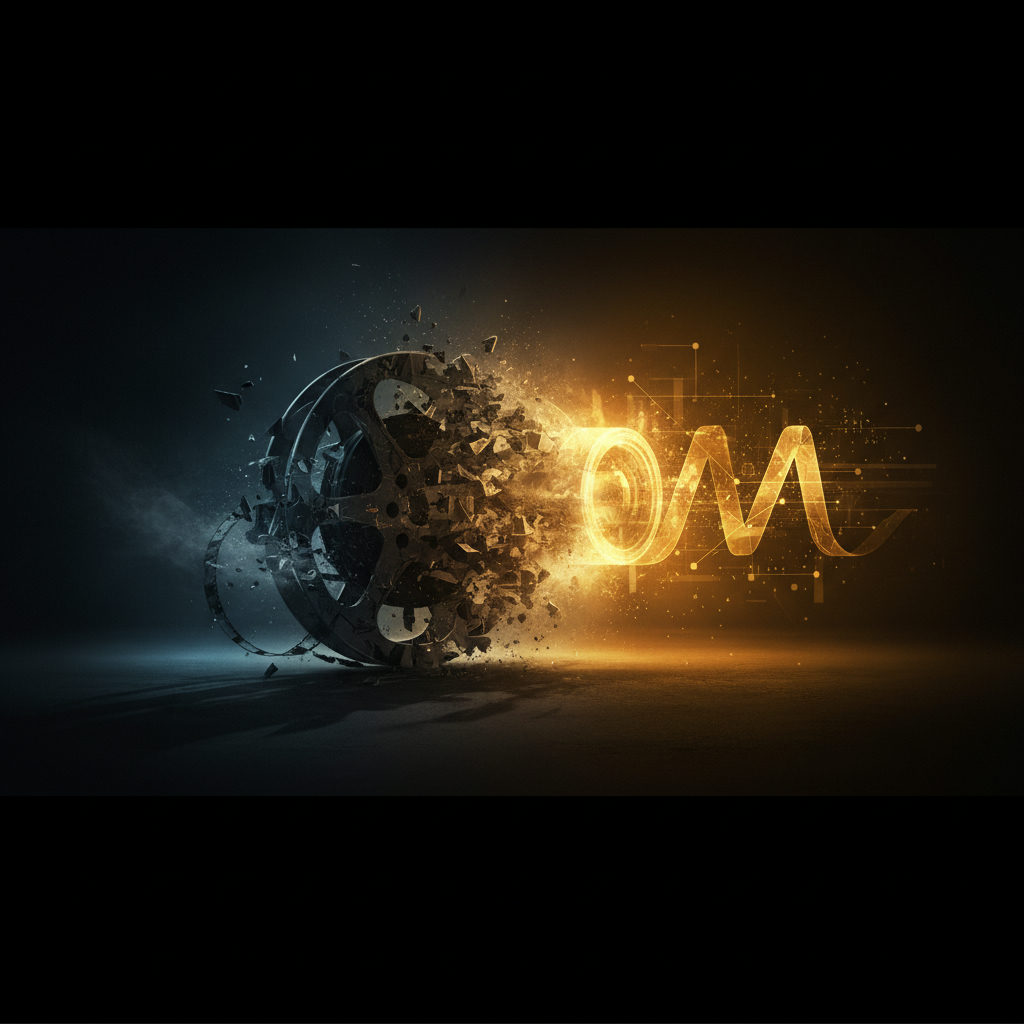
A cut after 25 years: Back to the beginning – with a full memory bank There are moments when you don’t just start a new scene, you rebuild the entire film from scratch. After almost 25 years in B2B commercial film production, we’ve arrived at exactly that point. The market is shifting, the environment is changing, technological progress is accelerating – and we’ve decided not to just go with the flow anymore, but to start over entirely. We’re going back to zero. At least from the outside. On the inside – in our heads, in our repositories, in our project archives – we’re bringing a ton of experience with us: from classic film production as well as from software development. Both now merge in Not Another Mate into something new: an Austrian SaaS company in the field of Generative AI with a focus on film, audio, and photography. “The old is the raw material from which the new is cut.” We’re not saying goodbye to our past. We’re just re-grading it, cutting it differently, and exporting it into a new format. From editing bench to timeline to text prompt: A brief look back If you’ve been in the film business since the late 1990s like we have, you’ve lived through several technological eras. The switch from linear to non-linear editing wasn’t just a change of tools, it was a mental shift. Suddenly you could jump, move, experiment, discard – without a physical splice, without tape copies, without the fear of destroying something irreversibly. Shortly after came the revolution in camera technology. What started as comparatively simple electronic video cameras evolved into fully fledged digital cinema cameras that eventually became the equal of their analog siblings. And then film aesthetics slipped into ever smaller bodies – DSLRs, mirrorless systems that practically fit in your pocket and still delivered images that once required heavy rigs and big budgets. In parallel, viewing habits changed. A little over 20 years ago, an unassuming short clip of a founder at the zoo was uploaded to a young platform called YouTube. Today, moving images are woven into every part of daily life: news, education, concerts, product launches, entertainment in every shade. New professions emerged, and with them entirely new economies. And then came social media. Suddenly it was less about the “perfect film” and more about not drowning in an ocean of content. Reach, algorithms, thumbnails, hooks in the first three seconds. The industry shifted again – and once more we had to learn to think differently: faster, more fragmented, louder. Is all of this a positive development? That’s something you can and should argue about. But it’s real. And we’re responding to this reality with a radical step: we’re starting over. Generative AI: Between AI slop and radical liberation Now comes the next wave: Generative AI. Text to video, text to audio, image to image, everything to everything, 24/7, no sleep, no break. The infrastructure for a potential flood is already in place. AI slop – a deluge of automatically generated content, often without relevance, without reflection, without real value. We’d be dishonest if we claimed to stand outside this development. We don’t. We’re part of it – but not unconditionally. Our products will enable people to create generative content. That’s the core of our new business model as a GenAI SaaS company. But the crucial point is this: we don’t see Generative AI as a machine that just spits out “even more content,” but as a tool that frees up time and possibilities. Time to think more deeply about what you’re making. Possibilities to realize stories that used to be technically or financially out of reach. Our goal is not to churn out meaningless videos that race through feeds and leave nothing behind. Our goal is to empower people to bring well-thought-out stories to life that, in the traditional sense, could never have been produced. When cameras get smaller, new perspectives emerge. When editing becomes non-linear, new narrative forms appear. When Generative AI becomes accessible, entirely new worlds can be built – provided someone is actually thinking about those worlds. Our new mission: Tools for what was (almost) impossible Not Another Mate is the result of that line of thought. We come from the hands-on world of filmmaking and from the world of software. We know deadlines, budgets, client expectations – just as we know code reviews, deployments, and product roadmaps. This dual experience now flows into a clear mission: We want to put tools in people’s hands that let them create what was previously almost impossible. Concretely, that means: SaaS products in the field of Generative AI that accelerate and expand film, audio, and photo production without trivializing them. Systems that don’t replace creativity, but lower production barriers. Tools that break open the “technical and financial bottleneck” that has left so many good ideas gathering dust in notebooks. The old fades out, but it doesn’t disappear. It remains as experience, as aesthetic sensibility, as craft in the background. It’s the foundation on which the new is built. Officially, we’re starting from zero – but with plenty of data in our heads and in our hearts. We don’t know how people will ultimately use our tools. No one can seriously predict that. What we do know is this: we want to play a part in ensuring that Generative AI isn’t remembered only as a source of randomness and throwaway content, but as an opportunity to enable stories that otherwise would never have been told. The new film has started. The old reel is running out, the image fades, a new take is up. We’re ready to hit “Rec” again.